
In Nevada, all eviction proceedings for non-payment of rent must begin with the service of a notice. The landlord must serve, or officially deliver, a Five (5) Day Notice to Pay Rent or Surrender Premises (also known as 5 Day Pay or Quit) to the tenant to start the eviction process (NRS 40.253[1][a]). For tenants who pay rent by the week, the landlord can serve a four-day notice (NRS 40.253[1][b]).
What is “rent”?
It’s important that landlords understand what constitutes “rent” and the fees that can be included in a 5 Day Pay or Quit:
Rent refers to the money a tenant pays every period to live on the rental property, plus any late fees as stated in the lease agreement (NRS.118A.150). The amount calculated as rent does not include court costs, collection fees, attorney’s fees, returned check fees, unpaid security deposits, etc. (NRS 40.253[9]). Therefore, a landlord cannot refuse rental payment because court costs, attorney’s fees, etc., are not remitted.
The summary eviction process
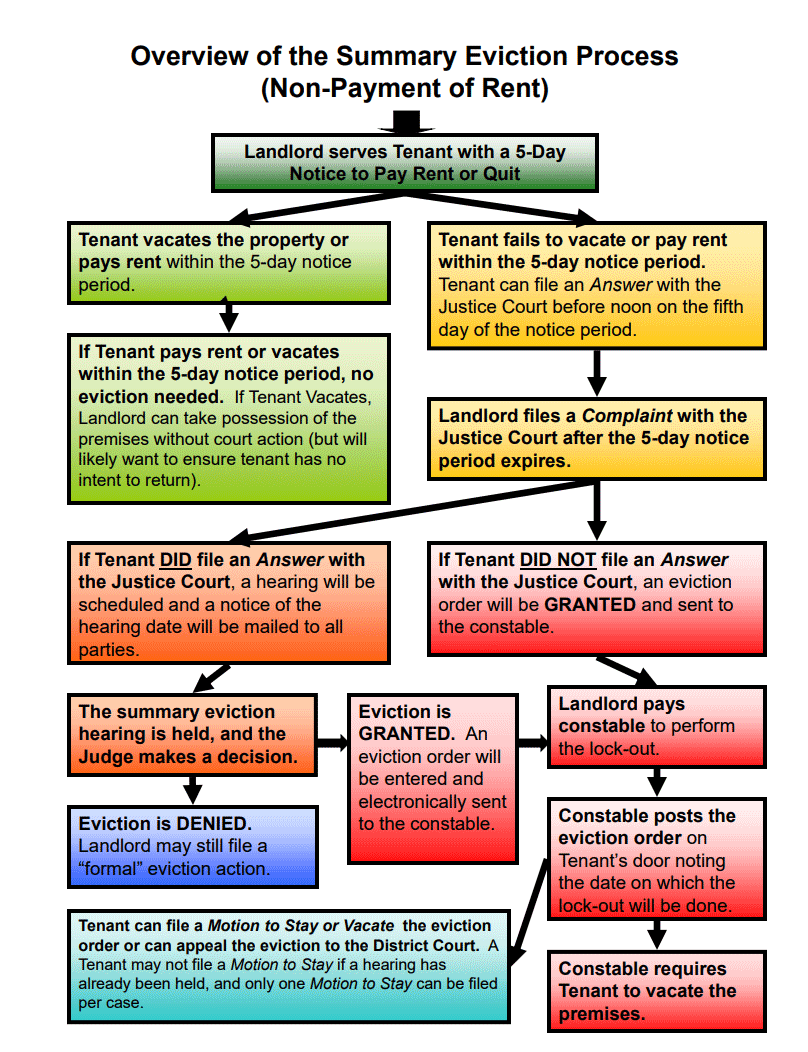
In LPS’s service area, the most frequently used eviction process is the summary eviction. After service of notice, the tenant has a mandatory period of time to comply or to file an answer/affidavit with the court to dispute the notice. If the tenant does not comply and/or file an answer, the landlord can proceed to lockout. Eviction time frames vary and are dependent on the Justice Court and constable scheduling.
There is no grace period on a 5 Day Pay or Quit notice, meaning that landlords can proceed with service of the notice the day after the rent is due. (However, if the particular lease and/or agreement between landlord and tenant allows for a grace period, then the landlord cannot proceed until that time has passed.) If a tenant does not file an answer and/or comply with the notice, the landlord can proceed to eviction/lockout filing after the fifth judicial day (excluding service day, court holidays, and weekends).
Benefits and drawbacks of summary eviction
From: www.civillawselfhelpcenter.org/self-help/evictions-housing/evictions
Some of the benefits of the summary eviction process are:
- A summary eviction [can be] easy for a landlord to file without the assistance of an attorney.
- The landlord is likely to get the tenant out of the rental property more quickly than with the formal eviction process.
Some of the drawbacks to the summary evictions process are:
- A landlord cannot get a money judgment as part of a summary eviction case (but can sue the tenant in a separate case for damages).
- If there is a genuine dispute over material facts, the court must dismiss the summary eviction case (although the landlord can then re-file a formal eviction).
- The tenant may be able to file an appeal to the district court and remain on the rental property until the appeal is heard by posting a “bond” (money or other security) with the court. The bond in a summary eviction case may be less than the bond required in a formal eviction.
Learn more
For more information on LPS assistance with the summary eviction process, please see our FAQ’s and Flow Chart.
If you are still unsure how to proceed, you may wish to contact an attorney for legal advice. LPS eviction specialists cannot provide legal advice.